34 refer to the diagram for a nondiscriminating monopolist. the profit-seeking monopolist will
61. Refer to the above diagram for a pure monopolist. Monopoly output will be: A. between f and g. B. h. C. g. D. f. 62. Refer to the above diagram for a pure monopolist. Monopoly profit: A. cannot be determined from the information given. B. will be ae per unit sold. C. will be bc per unit sold. D. will be ac per unit sold. 63. than with nondiscriminating monopoly; others, a lower price. Good features: greater output and improved allocative efficiency. Bad feature: More income is transferred from consumers to the monopolist. 24-7 Assume a pure monopolist and a purely competitive firm have the same unit costs. Contrast the
57. Refer to the above diagram for a nondiscriminating monopolist. The profit-maximizing output for this firm is M. True False 58. Refer to the above diagram for a nondiscriminating monopolist. At the profit-maximizing output the firm's economic profit will beBAFG. True False 59. Refer to the above diagram for a nondiscriminating monopolist.
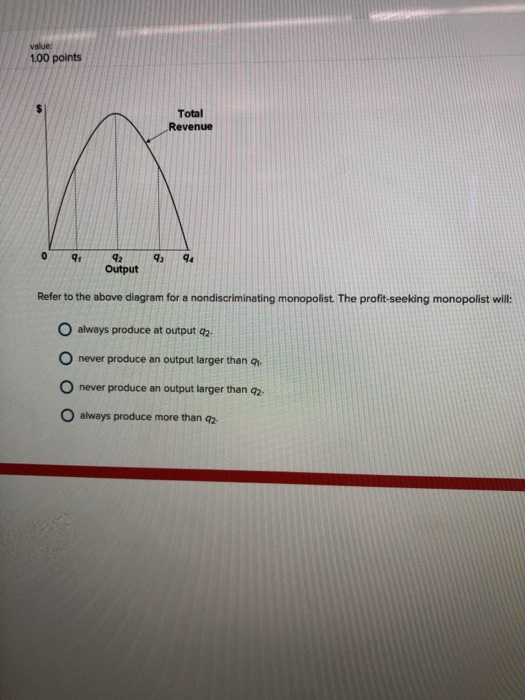
Refer to the diagram for a nondiscriminating monopolist. the profit-seeking monopolist will
5. Refer to the diagram for a nondiscriminating monopolist. The profit-seeking monopolist will: C. never produce an output larger than q 2. 6. Assume a pure monopolist is currently operating at a price-quantity combination on the inelastic segment of its demand curve. If the monopolist is seeking maximum profits, it should: D. charge a higher ... Refer to the diagram below for a pure monopolist. Suppose a regulatory commission is created to determine a legal price for the monopoly. If the commission seeks to provide the monopolist with a "fair return," it will set price at: A) P1. B) P3. C) P2. D) P4. The profit-seeking monopolist will: O always produce at output o2. ... Revenue 42 Output 3 94 Refer to the above diagram for a nondiscriminating monopolist.
Refer to the diagram for a nondiscriminating monopolist. the profit-seeking monopolist will. 53. Refer to the above diagram for a nondiscriminating monopolist. Marginal revenue will be zero at output: A. q1. B. q2. C. q3. D. q4. 54. Refer to the above diagram for a nondiscriminating monopolist. The profit-seeking monopolist will: A. always produce at output q2. B. always produce more than q2. C. never produce an output larger than q2. Refer to the diagram for a nondiscriminating monopolist. The profit-seeking monopolist will: asked Aug 17, 2018 in Economics by Kaywee. principles-of-economics; If a nondiscriminating pure monopolist decides to sell one more unit of output, the marginal revenue associated with that unit will be: Refer to the diagram for a nondiscriminating monopolist. The profit-seeking monopolist will: C. never produce an output larger than q 2. 6. Assume a pure monopolist is currently operating at a price-quantity combination on the inelastic segment of its demand curve. If the monopolist is seeking maximum profits, it should: Refer to the above diagram for a nondiscriminating monopolist. Refer to the diagram for a nondiscriminating monopolist the profit seeking monopolist will. Refer to the data for a nondiscriminating monopolist. Never produce an output larger than q 1. Will never produce in the output range where marginal revenue is positive.
Refer to the diagram the profit maximizing level of output for this firm. The price elasticity of a monopolistically competitive firms demand curve varies. Refer to the above data for a nondiscriminating monopolist. Refer to the above data for a monopolist. This firms profit maximizing price will be. Directly with the number of competitors. Refer to the data for a nondiscriminating monopolist. At its profit-maximizing output, this firm's price will exceed its marginal cost by ____ and its average total cost by ____. asked Aug 17, 2018 in Economics by Dorothy (Supposed to be a graph) Refer to the diagram for a nondiscriminating monopolist. The profit-seeking monopolist will a.) always produce at output q2. b.) always produce more than q2. c.) never produce an output larger than q2. d.) never produce an output larger than q1. Hw 9 Chap 12. Refer to the demand and cost data for a pure monopolist given in the table. If the monopolist perfectly price-discriminated and sold each unit of the product at the maximum price the buyer of that unit would be willing to pay, and if the monopolist sold 4 units, then total revenue would be. $900. near-monopoly.
Refer to the above diagrams. In diagram (B) the profit-maximizing quantity is: g and the profit-maximizing price is d. Refer to the above diagrams. With the industry structure represented by diagram: (A) there will be only a normal profit in the long run, while in (B) an economic profit can persist. Refer to the above diagram for a nondiscriminating monopolist. The profit-seeking monopolist will: A) B) Answer: C always produce at output q2. always ... But if there is a barrier, entry by profit-seeking firms does not happen and ... The marginal revenue curve for a single priced monopolist will always be ... Cheap essay writing sercice. If you need professional help with completing any kind of homework, Solution Essays is the right place to get it. Whether you are looking for essay, coursework, research, or term paper help, or with any other assignments, it is no problem for us.
Solved Value 1 00 Points Total Revenue 42 Output 3 94 Refer Chegg Com
9. Refer to the above diagram. At the profit-maximizing level of output, the firm will realize: A) an economic profit of ABHJ. B) an economic profit of ACGJ. C) a loss of GH per unit. D) a loss of JH per unit. 10. Refer to the above diagram for a pure monopolist. Monopoly price will be: A) e. B) c. C) b. D) a. 11.

Econhw13sols15 Pdf 44 Award 1 00 Point Refer To The Diagram For A Nondiscriminating Monopolist Marginal Revenue Will Be Zero At Output Q1 Q2 Q3 Q4 Course Hero
Refer to the above long-run cost diagram for a firm. If the firm produces output Q 2 at an average cost of ATC 2, then the firm is: A. producing the profit-maximizing output, but is failing to minimize production costs. B. incurring X-inefficiency, but is producing that output at which all existing economies of scale might be realized. C.
Nanopdf Com
Refer to the above data for a nondiscriminating monopolist. At its profit-maximizing output, this firm's price will exceed its marginal cost by ____ and its average total cost by ____. A) $20; $27.33. B) $10; $10.40. C) $24; $27.33. D) $30; $20.50. Use the following to answer question 20: 20. Refer to the above diagram.
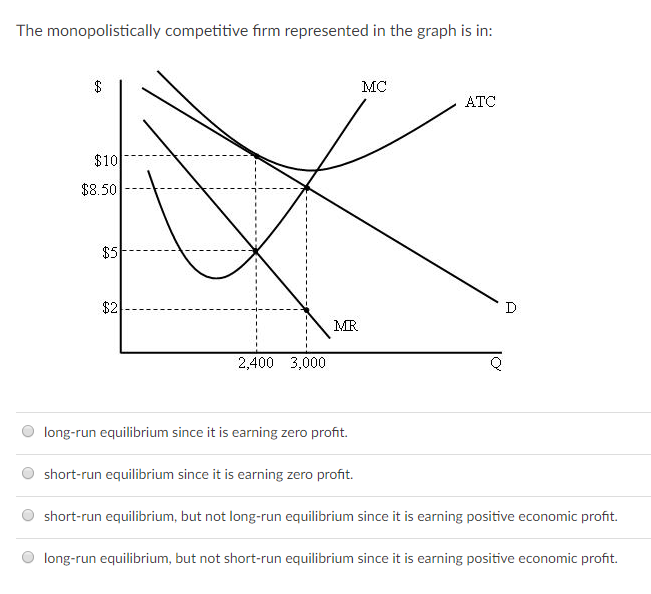
Solved The Graph Illustrates An Unregulated Chegg Com
output would the profit-seeking firm produce? Finally, use your analysis to explain why a monopolist would never produce in the inelastic region of demand.

Solved Exhibit 9 3 S 0 Mc Atc 24 10 Imr 0 500 900 500 1 100 1 700 Refer 1 Answer Transtutors
Refer to the diagram for a nondiscriminating monopolist. The profit-seeking monopolist will. answer choices. always produce at output q2.

Pdf Fulltext Stamped Laksmi Cahyady Academia Edu
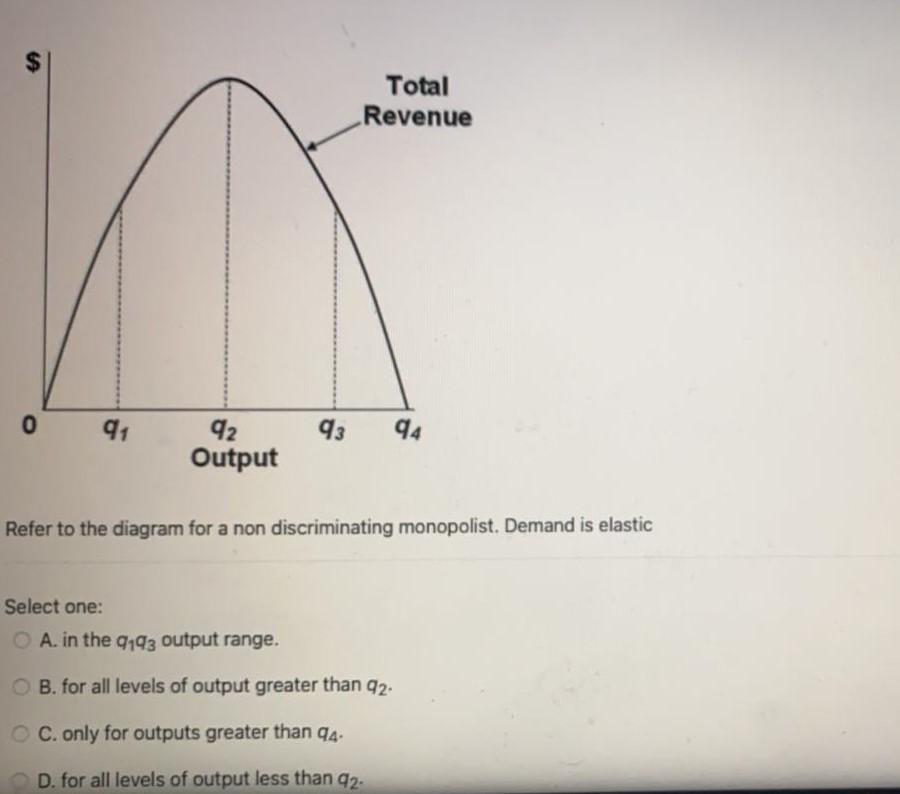
Refer to the diagram for a non discriminating monopolist. Demand is elastic for all levels of output less than q 2. Refer to the diagram for a nondiscriminating monopolist. Marginal revenue will be zero at output q 2. Refer to the diagram for a nondiscriminating monopolist. The profit-seeking monopolist will never produce an output larger than q 2.
Azslide Com
54. Refer to the above diagram for a nondiscriminating monopolist. The profit-seeking monopolist will: A) always produce at output q2. C) never produce an output larger than q2. B) always produce more than q2. D) never produce an output larger than q1.

The Figure Below Shows The Revenue And Cost Curves For A Profit Maximizing Monopolist Based On The Homeworklib
Refer to the above long-run cost diagram for a firm. If the firm produces output Q 1 at an average total cost of ATC 1 , then the firm is: A.

Micro Ch 13 Pure Monopoly Part Ii Flashcards Quizlet
Economics questions and answers. Refer to the diagram for a nondiscriminating monopolist. Demand is elastic: Question 41 options: in the q1q3 output range. only for outputs greater than q4. for all levels of output less than q2. for all levels of output greater than q2.

Pdf Perfect Competition And The Creativity Of The Market
7. Refer to the diagram for a nondiscriminating monopolist. The profit-seeking monopolist will A. always produce at output q2. B. always produce more than q2. C. never produce an output larger than q2. D. never produce an output larger than q1.
Fd Valenciacollege Edu
| | |8. |A monopoly is an industry with a single firm in which the entry of new firms is blocked. |T / F | |9. |If entry of new firms is prohibited in a pure monopoly industry the monopolist may be able to earn normal profit in|T / F | | |the long run. | | |10. |The pure monopolist's demand curve is the industry demand curve. |T / F | |11.

Question 6 Correct Mark 150 Out Of 150 Flag Question Question Text Answer The Course Hero
ch9c. 1. A nondiscriminating monopolist will find that marginal revenue: A. exceeds average revenue or price. B. is identical to price. C. is sometimes greater and sometimes less than price.
Nanopdf Com
Refer to the diagram for a nondiscriminating monopolist Marginal revenue will from ... The profit-seeking monopolist will A. always produce at output q2.

Econhw13sols15 Pdf 44 Award 1 00 Point Refer To The Diagram For A Nondiscriminating Monopolist Marginal Revenue Will Be Zero At Output Q1 Q2 Q3 Q4 Course Hero
The pure monopolist's demand curve is relatively elastic: A. in the price range where total revenue is declining. B. at all points where the demand curve lies above the horizontal axis. C. in the price range where marginal revenue is negative. D. in the price range where marginal revenue is positive. 9.
Solved Px S Mc Px Mc B D Mr Gh A Q 0 A B Refer To The Chegg Com
The profit-seeking monopolist will: O always produce at output o2. ... Revenue 42 Output 3 94 Refer to the above diagram for a nondiscriminating monopolist.

Monopoly Homework Questions Answers Transtutors Nolhan Yaelle Lire En Ligne Pdf
Refer to the diagram below for a pure monopolist. Suppose a regulatory commission is created to determine a legal price for the monopoly. If the commission seeks to provide the monopolist with a "fair return," it will set price at: A) P1. B) P3. C) P2. D) P4.

Econ Ch 12 Flashcards Quizlet
5. Refer to the diagram for a nondiscriminating monopolist. The profit-seeking monopolist will: C. never produce an output larger than q 2. 6. Assume a pure monopolist is currently operating at a price-quantity combination on the inelastic segment of its demand curve. If the monopolist is seeking maximum profits, it should: D. charge a higher ...

Microeconomics Pdfcoffee Com
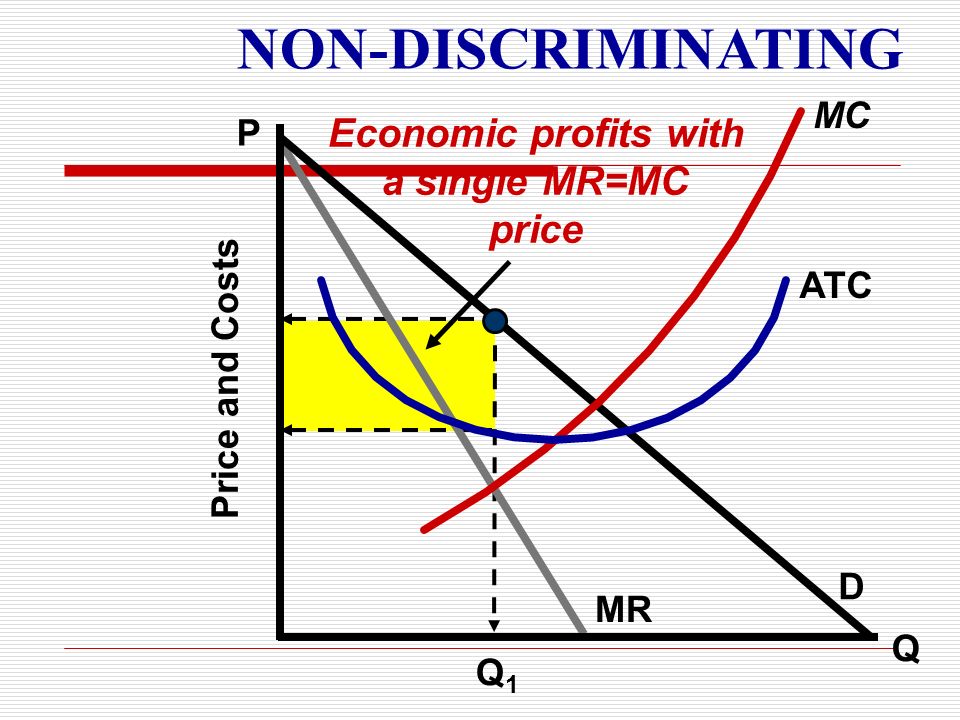
Monopoly Chapter Ppt Video Online Download

Econ Ch 10 14 Flashcards Quizlet
1

Test 3 Study Guide Flashcards Quizlet

Pdf Cross Border Crime And The Interface Between Legal And Illegal Actors

Test 3 Study Guide Flashcards Quizlet

Econ Ch 12 Flashcards Quizlet

Study Economics Online Questions And Answers
Azslide Com

Micro Ch 13 Pure Monopoly Part Ii Flashcards Quizlet
Chapter 12 Quizizz

Micro Ch 13 Pure Monopoly Part Ii Flashcards Quizlet

Monopoly Homework Questions Answers Transtutors Nolhan Yaelle Lire En Ligne Pdf
1

Get Answer 26 Refer To The Above Data For A Monopolist This Firm Will Transtutors

Study Guide For Exam 3 Principles Of Macroeconomics Econ 22060 Docsity
0 Response to "34 refer to the diagram for a nondiscriminating monopolist. the profit-seeking monopolist will"
Post a Comment