37 fishbone diagram quality improvement
by Z Harel · 2016 · Cited by 47 — The Ishikawa or fishbone diagram is used when a team seeks to understand the many potential causes contributing to the quality of care problem ... Quality, Service Improvement and Redesign Tools: Cause and effect (fishbone) Background The cause and effect diagram is sometimes called a fishbone diagram (because the diagram looks like the skeleton of a fish) or an Ishikawa diagram (after Professor Kaoru Ishikawa of Tokyo University who invented it in 1968).
The Fishbone Diagram, additionally accepted as an Ishikawa diagram, identifies accessible causes for an aftereffect or problem. Learn about the added 7 Basic Quality Tools at ASQ.org. This diagram was created in ConceptDraw PRO application the Fishbone Diagrams Library from the Fishbone Diagrams Solution. An accomplished user spent 15 account ...
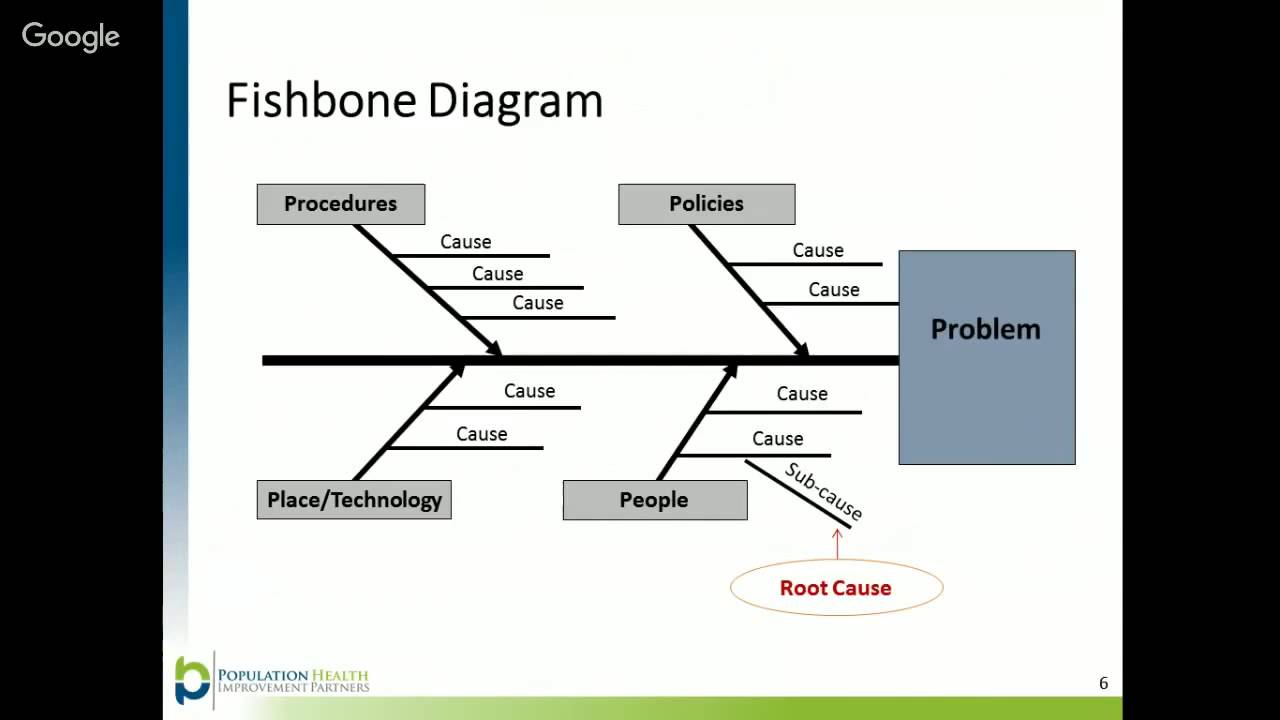
Fishbone diagram quality improvement
Fishbone diagrams are often used when investigating a significant adverse event but are also useful when looking at a quality improvement problem. How to use it? Get together the people who experience the problem on a regular basis. These are your experts. Start with your problem written on one side of the page. On post-it notes, write down the possible reasons for your problem. Try to make ... Overview: Root cause analysis is a structured team process that assists in identifying ... A cause and effect diagram, often called a “fishbone” diagram, ...3 pages Quality improvement leaders use this tool to measure process performance to identify the highest cause of defects in the business process. In general, 20% of issues cause 80% of defects. ... Fishbone or Ishikawa Diagrams. A fishbone diagram, also commonly called an Ishikawa diagram, is a tool for performing cause and effect analysis. The most ...
Fishbone diagram quality improvement. Week 1 Project Hide Assignment InformationTURNITIN®This assignment will be submitted to Turnitin®.INSTRUCTIONS Before beginning work on this assignment, please review the expanded grading rubric for specific instructions relating to content and formatting. There are three principles of total quality: customer focus, continuous improvement, and teamwork. Details: Select a quality issue in any organization or department. What are the significant factors that contribute to the problem? Conduct an assessment of the problem using one of the following tools: Fishbone Diagram Check Sheet Histogram Pareto Chart Flowchart Scatterplot Run Chart Provide a detailed critique of the problem based on your selected quality […] 1. Review: Chapter 3: Quality Improvement Tools, Centers for Medicare and Medicaid Services How to Use the Fishbone Tool for Root Cause Analysis and Guidance for Performing a Root Cause Analysis (RCA) With Performance Improvement Projects (PIPs). 2. View: IHI QI Toolkit and fishbone diagram support resources: a. Cause and Effect Diagram Video: b. The goal of the assignment is to develop a deeper understanding of the practice issue, using continuous quality improvement tools; specifically, a failure mode & effect analysis (FMEA) of the selected practice problem and an Ishikawa (fishbone) cause and effect diagram to analyze, improve, or mitigate related risks.
The first quality tool that can be used to evaluate processes is the cause-and-effect diagram, also known as Ishikawa/fishbone chart. This diagram can be used to identify many possible causes for ... Analyze production and quality trend data to identify and solve problems using statistical tools. Implement changes to products and manufacturing to improve quality, reliability and to address improvement of process, design and/or materials. Support risk management activities for design controls, CAPA, Complaint Investigation and HHE process. Once the basic problem-solving or quality improvement process is understood, the addition of quality tools can make the process proceed more quickly and systematically. Seven simple tools can be used by any professional to ease the quality improvement process: flowcharts, check sheets, Pareto diagrams, cause and effect diagrams, histograms ... How to Construct a Fishbone Diagram. Document first published: 26 June 2011 Page updated: 26 June 2018 Publication type: Guidance Medical Conditions and Contexts of Care: Improvement Challenges: Improvement Tools, Measurement. This publication was developed by NHS Improvement as part of their Improvement System, a set of resources to support quality improvement in NHS services. Document. How ...
The cause and effect diagram was adopted by Dr W Edwards Deming as a helpful tool for improving quality. Dr Deming has been teaching total quality management in Japan since World War II. He has also helped develop statistical tools used for the census, and has taught methods of quality management to the military. Both Ishikawa and Deming use this diagram as one the first tools in the quality ... A cause and effect diagram, also known as an Ishikawa or "fishbone" diagram, is a graphic tool used to explore and display the possible causes of a certain ... A new quality director has reviewed the information related to the Quality Council minutes and notes the following: - The council meets quarterly. Meetings last approximately two hours. - The council roster includes all clinical department managers and the quality director. Attendance ranges from 45-60%. Quality Improvement Case Study—Fishbone Analysis) Mr. Henry Baum is a 72-year-old man with a long-standing history of a seizure. disorder. He also has hypertension (high blood pressure) and chronic obstructive. pulmonary disease (COPD). He is no stranger to the hospital because of his health. issues.
Mch Qi Tools Root Cause Analysis Fishbone Diagram Youtube
Cause and effect diagram (fishbone or Ishikawa diagram) Pareto chart (80-20 rule) Scatter diagram (Shewhart chart) Control chart. What are quality tools and techniques? The tools and techniques most commonly used in Quality management and process improvement are: Cause and effect diagram. Control Charts. Histogram. Pareto Charts.

Fishbone Diagram Six Sigma Pool
A fishbone diagram helps team members visually diagram a problem or condition's root causes, allowing them to truly diagnose the problem rather than ...

An Ishikawa Or Fishbone Diagram Demonstrates The Relationships Between Download Scientific Diagram
There are various Quality Management Tools which will be used for solving different problems or issues. What You Will Learn: List Of The 7 Basic Quality Tools. #1) Flowchart. #2) Check Sheet. #3) Cause-Effect Diagram. #4) Pareto Chart.

Fishbone Diagram Solution Conceptdraw Ishikawa Diagram Fish Bone Business Analysis
A fishbone diagram, also called a cause and effect diagram, or an Ishikawa diagram, is a visualization tool for categorizing the potential causes of a problem, in order to identify its root causes. The design of the diagram looks like a skeleton of a fish, hence the name. Download NHSI fishbone guidance ; It’s a helpful tool if you are trying to establish why a particular problem is ...

Fishbone Diagram Tutorial Complete Guide With Reusuable Templates
Quality measures are methods to appraise health care by using standards. The purpose of these measures are to make sure all patients get the right care at the appropriate time. Refer back to your Fishbone Diagram in the Quality Improvement: Preventable Errors assignment in Week 1 and select two areas of improvement you focused on […]

Ishikawa Fishbone Diagram Explanatory Theory Of Barriers In Primary Download Scientific Diagram
Total quality management is a broad term that incorporates many different foundational quality control concepts. While TQM was more prevalent in the 1980s, many companies still use it today as the basis for their quality strategy. For many, this approach goes far beyond control charts and fishbone diagrams.
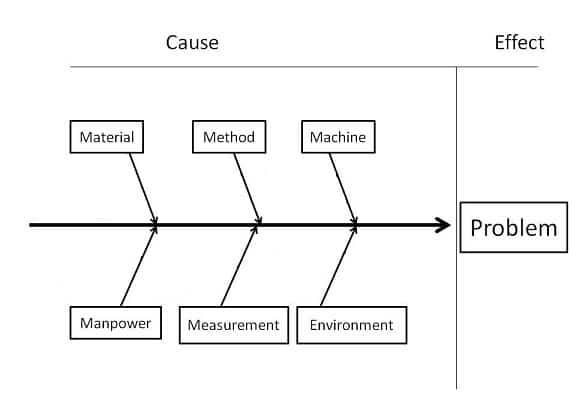
Fishbone Diagram Cause And Effect Or Ishikawa Diagram Example And Template Pm Study Circle
Quality improvement in health care is the responsibility of everyone (eg, patients, families, health providers, and administrative staff) to work toward delivering high-quality patient care, advancing professional knowledge and skills, and creating effective and efficient processes of care. Those in …

Ppt Fishbone Diagram Powerpoint Presentation Free Download Id 6732107
A fish-bone diagram is one of the seven quality circles (QC) tools. It helps to visualize the potential causes in order to find the root cause of a particular problem. It helps to identify, analyze and improve quality issues. Sometimes, it can also be helpful to analyze what can go wrong - preventing future problems. It derives its name for its shape which resembles the side view of the ...
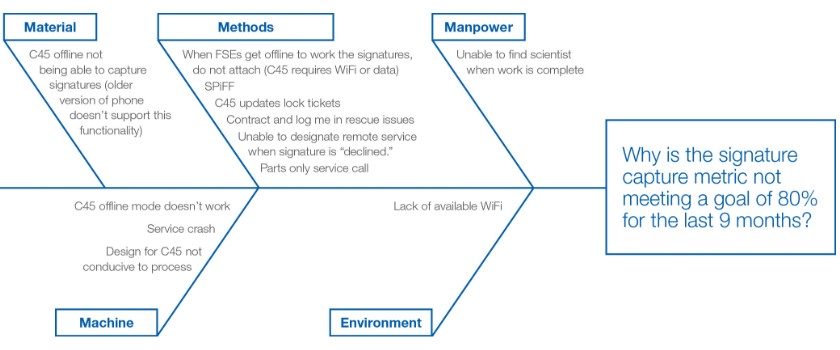
Leveraging Fishbone Diagrams To Uncover Root Cause
Fishbone Diagram Continuous Improvement Blog. Save Image. Fishbone diagram example from Graham Ross of Lean Kaizen . ... Lean Tool Fish Bone Diagrams Cause Effect Diagram Lean . ... Pin on Business mgmt Quality Improvement. Save Image. Pin on Administração de empresas.
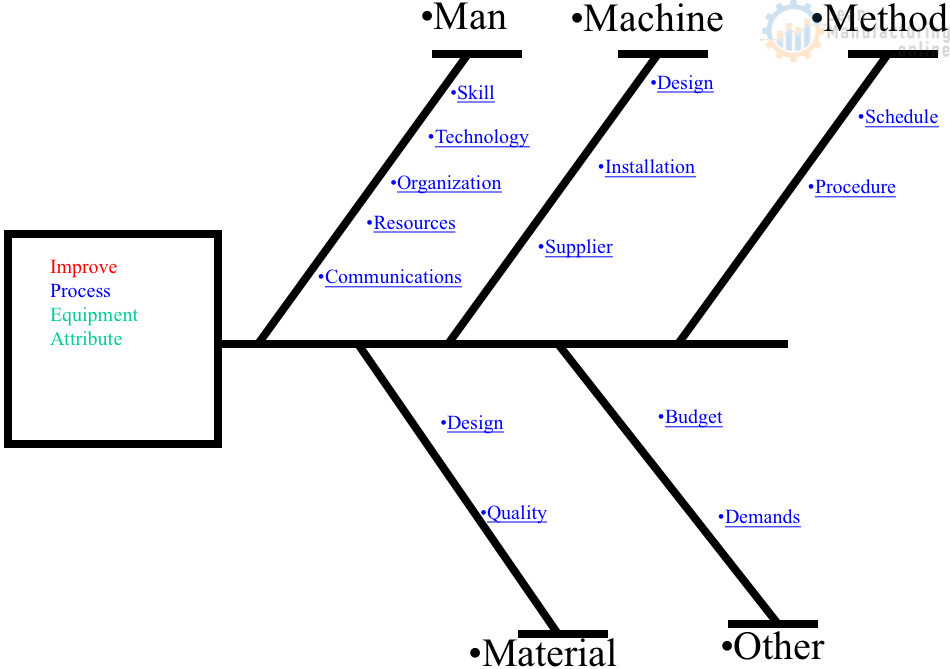
4m Analysis Process Continuously Improving Manufacturing
What is the Apollo method? The Apollo Root Cause Analysis methodology, created by Dean Gano, is a simple, but powerful, 4 step problem solving method that; defines the problem, determines the causes, finds effective solutions and provides confidence that the problem will not recur.

Ishikawa Diagram Wikipedia
The fishbone diagram is one of the seven basic quality control tools. Though all these tools have their importance, the fishbone diagram is distinct. Project managers use this diagram during quality management. The fishbone diagram has many names: the Ishikawa diagram, Fishikawa diagram, Herringbone diagram, and the cause-and-effect diagram.

Figure 4 From Wake Up Safe And Root Cause Analysis Quality Improvement In Pediatric Anesthesia Semantic Scholar
quality improvement, many less commonly used, and some created by the author and not available elsewhere. The reader will find the widely used seven basic quality control tools (for example, fishbone diagram, and Pareto chart) as well as the newer management and planning tools. Tools are included for generating and organizing ideas,
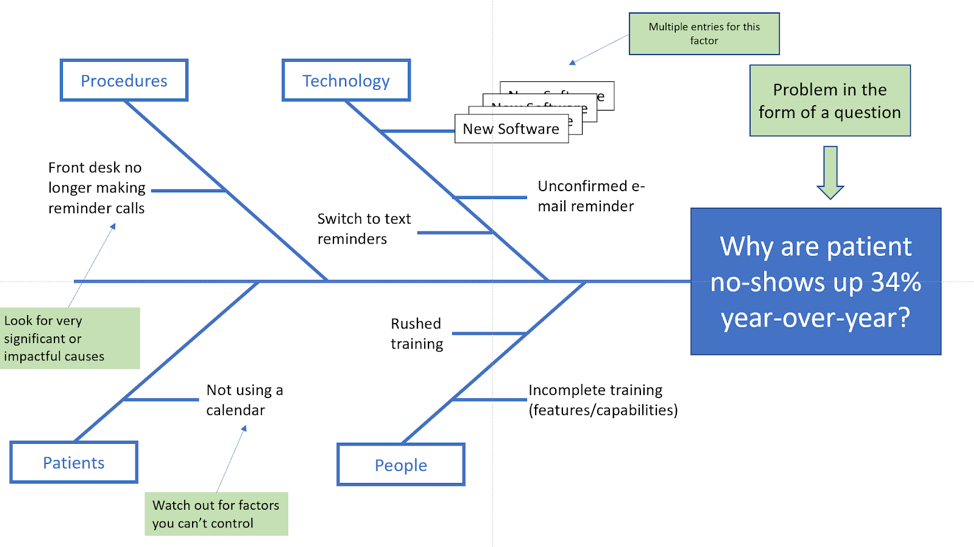
Fishbone Problem Solving In Medical Practices Vanguard Comm Co
The fishbone diagram and collaborative team approach were key elements of Ishikawa"s "company-wide quality control" quality strategy. His "quality circles" model became popular worldwide for the fresh breath it provided previously stale problem-solving strategies.
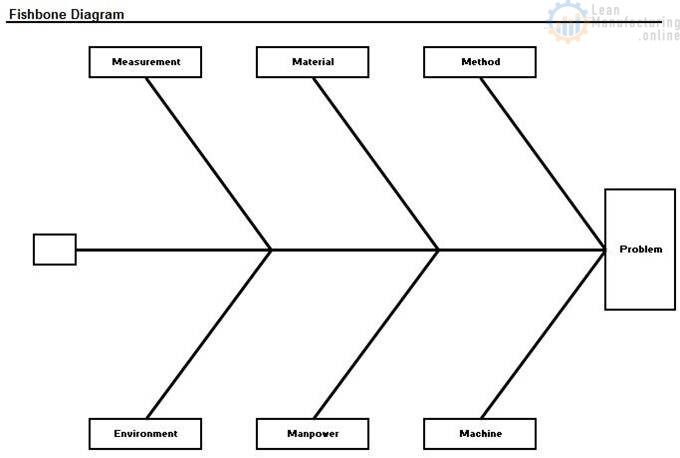
The Fishbone Diagram Continuously Improving Manufacturing
A fishbone diagram is used to identify the sources of variation within a process. It helps to identify the root causes of a problem or effect in order to identify appropriate solutions. It is often used in Lean Six Sigma and other quality improvement approaches to narrow down the area of analysis. The outcome of a fishbone diagram will provide further information for later problem-solving tools.
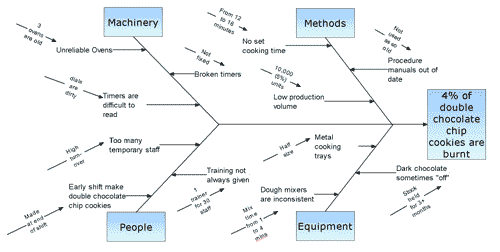
Process Improvement Made Easy Cause And Effect Aka Fishbone Aka Ishikawa Diagram Explained Management For The Rest Of Us
Fish(bone) Stories (Quality Progress) Today's technology makes it easier than ever to communicate complex concepts more clearly, which is why older, "analog" quality methods should be digitized. The authors explore how digitizing one of the seven basic quality tools—the fishbone diagram—using mind mapping can significantly improve the tool.
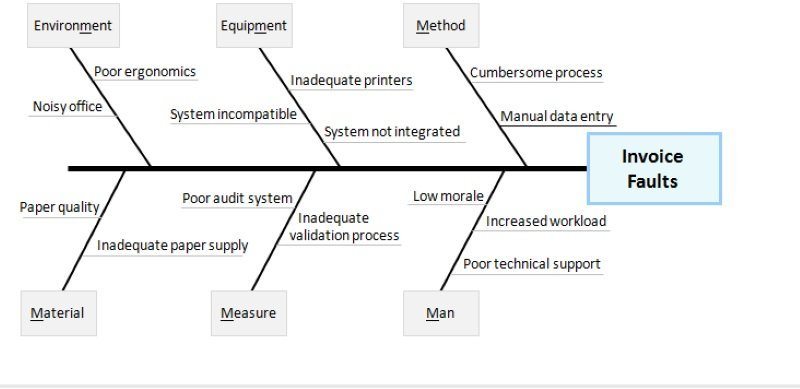
Fishbone Diagram Complete Guide Edrawmax Online
Quality measures are methods to appraise health care by using standards. The purpose of these measures are to make sure all patients get the right care at the appropriate time. Refer back to your Fishbone Diagram in the Quality Improvement: Preventable Errors assignment in Week 1 and select two areas of improvement you focused on […]
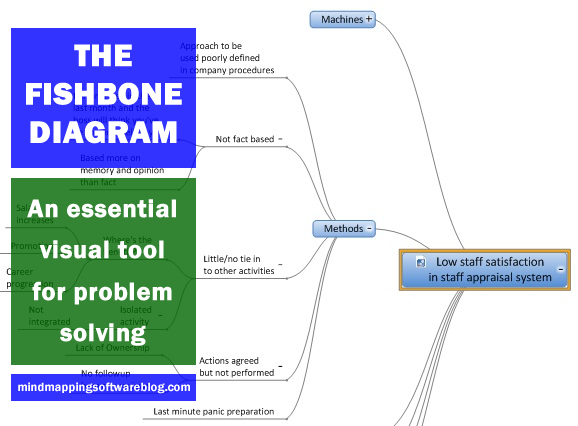
The Fishbone Diagram An Essential Visual Tool For Problem Solving
Fishbone diagram. Also known as the cause and effect diagram , it was first developed in the 1960s by Kaoru Ishikawa to determine potential root causes of complex problems. The "fish's head" is considered the problem, and the six "fishbones" are the areas of investigation to uncover potential reasons for it: measurements, materials ...
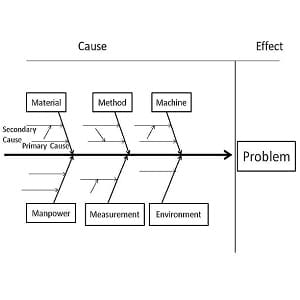
Fishbone Diagram Cause And Effect Or Ishikawa Diagram Example And Template Pm Study Circle
Quality Tool Assessment •Select a quality issue in any organization or department. What are the significant factors that contribute to the problem? Conduct an assessment of the problem using one of the following tools: Fishbone Diagram Check Sheet Histogram Pareto […]
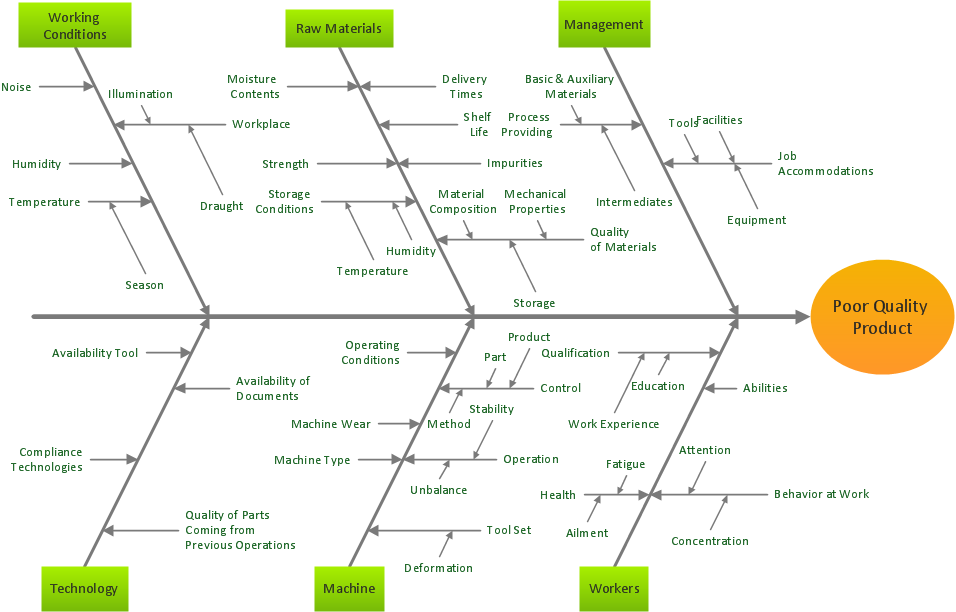
Cause And Effect Diagram Increase In Productivity Fishbone Diagram Causes Of Low Quality Output Fishbone Diagram Bad Coffee Wiki Fishbone Diagram
The bulk of the DMAIC process improvement happens during the analysis stage. During the analysis stage of DMAIC, teams use a fishbone diagram, or an Ishikawa diagram, to visualize the possible causes of a product defect. The head of the fishbone diagram states the initial problem—then as you follow along the spine of the fish, each rib lists ...
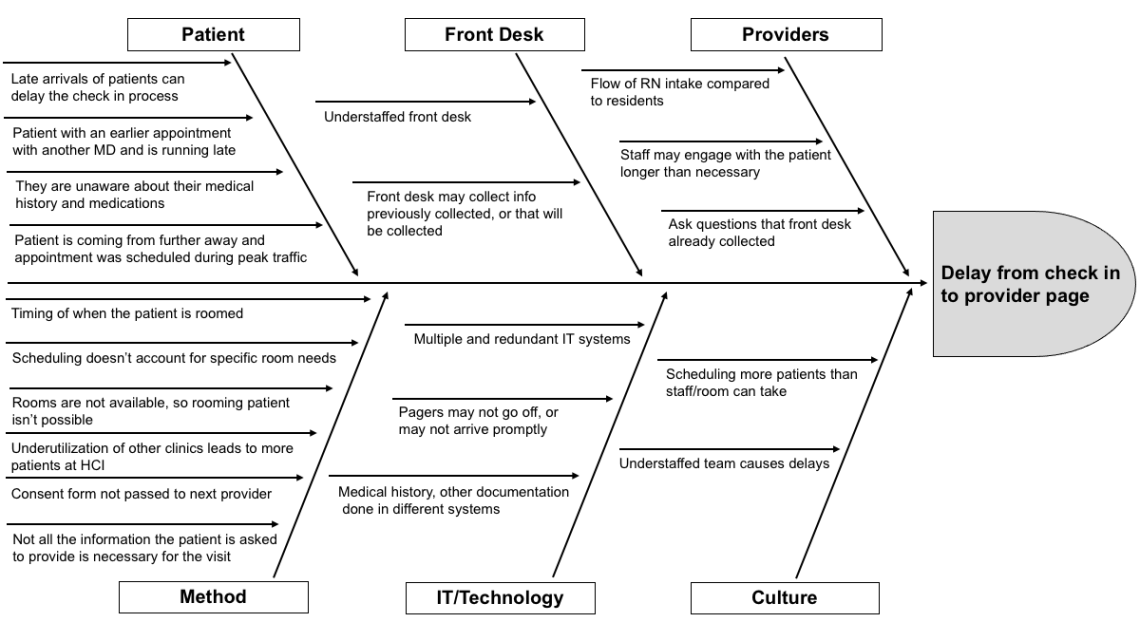
Fishbone Diagram A Tool To Organize A Problem S Cause And Effect
Also called: cause-and-effect diagram, Ishikawa diagram. This cause analysis tool is considered one of the seven basic quality tools. The fishbone diagram identifies many possible causes for an effect or problem. It can be used to structure a brainstorming session. It immediately sorts ideas into useful categories.

Fishbone Diagram Created For Cause And Effect Analysis Shows Possible Download Scientific Diagram
This Quality Improvement Poster Project is an activity designed to expose students to the processes of identifying a problem in practice, using tools to analyze the issue and to determine a plan of action to address the problem. ... Cause and Effect Diagram (Fishbone Diagram) The science of improvement on a whiteboard! Robert Lloyd, IHI Vice ...
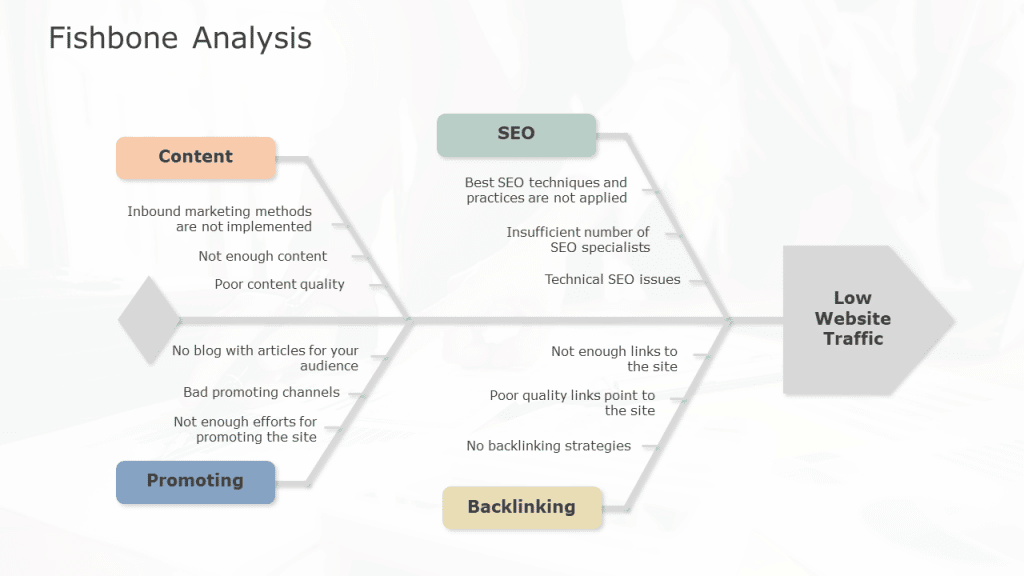
A Quick Guide On Fishbone Analysis Plus Discover Best Fishbone Diagram Templates For Powerpoint
Quality improvement leaders use this tool to measure process performance to identify the highest cause of defects in the business process. In general, 20% of issues cause 80% of defects. ... Fishbone or Ishikawa Diagrams. A fishbone diagram, also commonly called an Ishikawa diagram, is a tool for performing cause and effect analysis. The most ...

Cara Pembuatan Fishbone Diagram Diagram Sirip Ikan
Overview: Root cause analysis is a structured team process that assists in identifying ... A cause and effect diagram, often called a “fishbone” diagram, ...3 pages
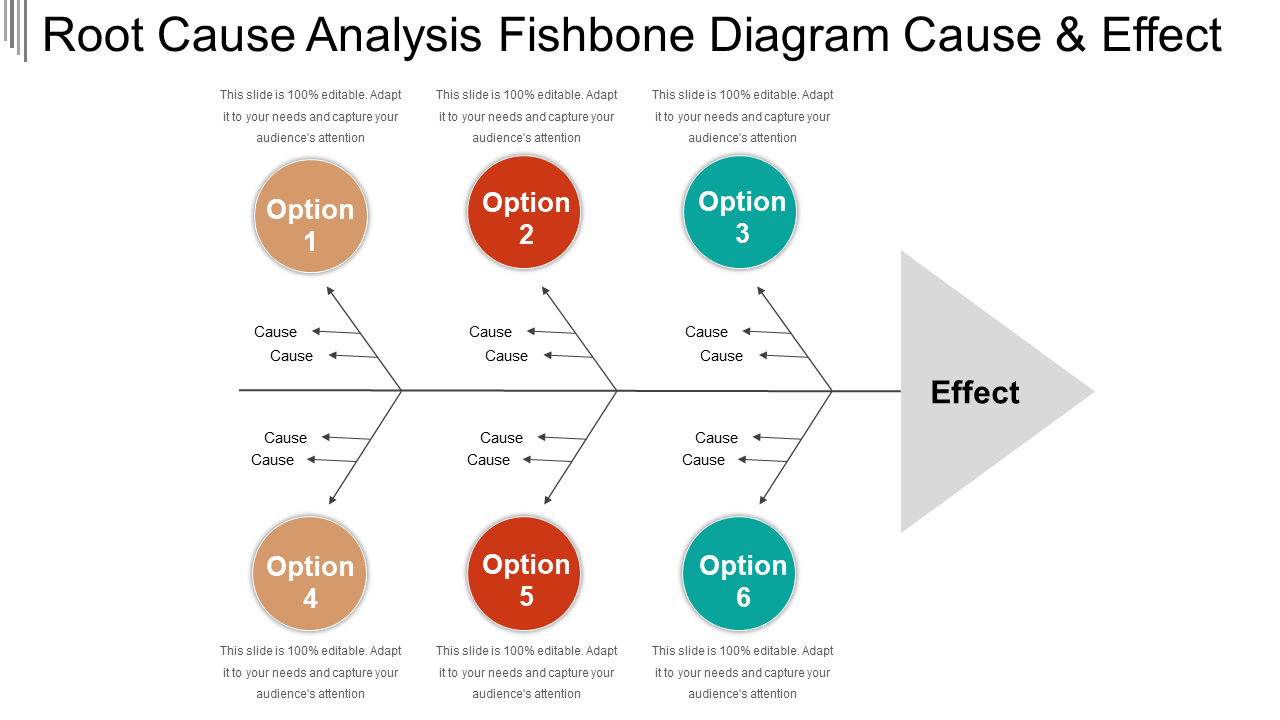
Top 25 Fishbone Diagram Ppt Templates To Conduct Root Cause Analysis The Slideteam Blog
Fishbone diagrams are often used when investigating a significant adverse event but are also useful when looking at a quality improvement problem. How to use it? Get together the people who experience the problem on a regular basis. These are your experts. Start with your problem written on one side of the page. On post-it notes, write down the possible reasons for your problem. Try to make ...

Cause Effect Fishbone Quality Engineering Systems
1

How To Use The Fishbone Diagram To Determine Data Quality Root Causes Lightsondata
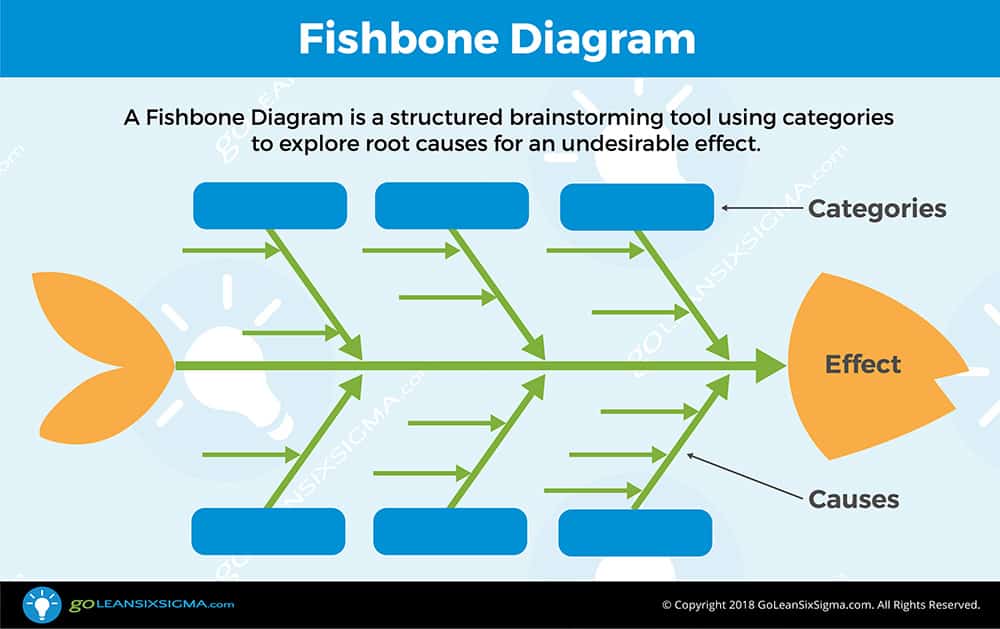
Fishbone Diagram Aka Cause Effect Diagram Template Example

Cause Effect Fishbone Diagram
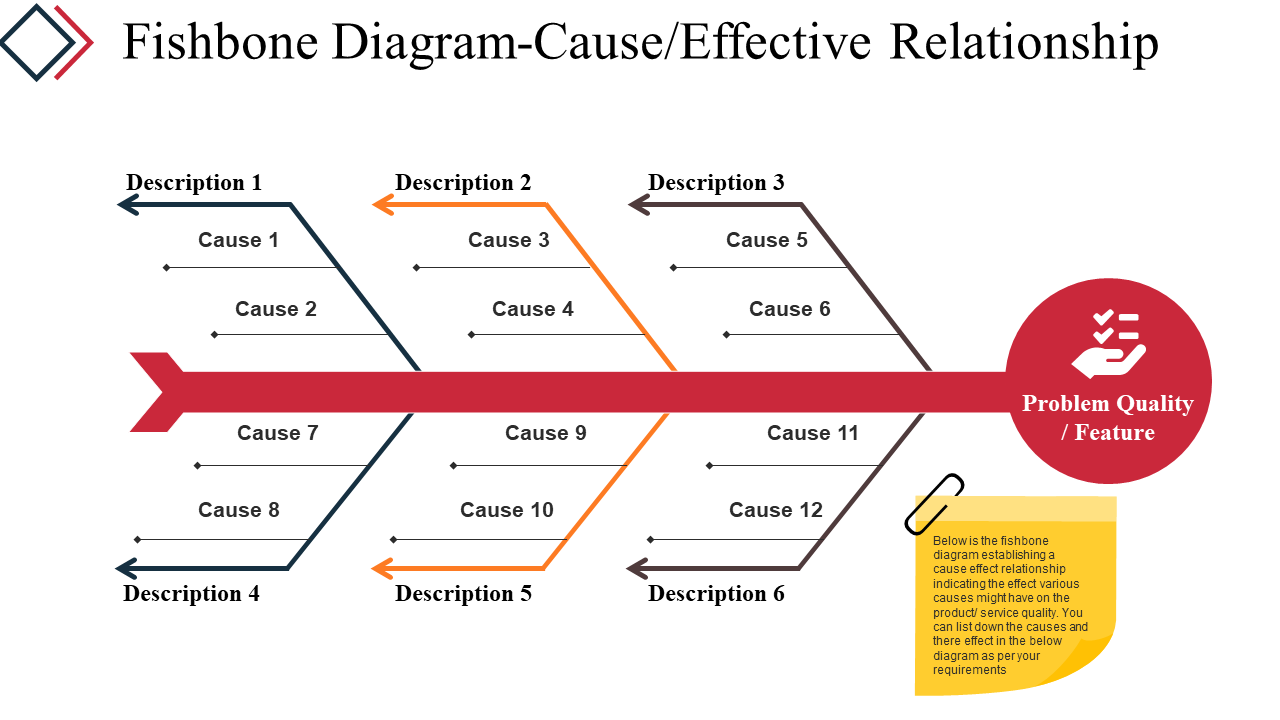
Top 25 Fishbone Diagram Ppt Templates To Conduct Root Cause Analysis The Slideteam Blog

The Guru Kaoru Ishikawa Dan Fishbone Diagram Shift Indonesia

Root Cause Analysis The Fishbone Diagramme Reporting Obligations
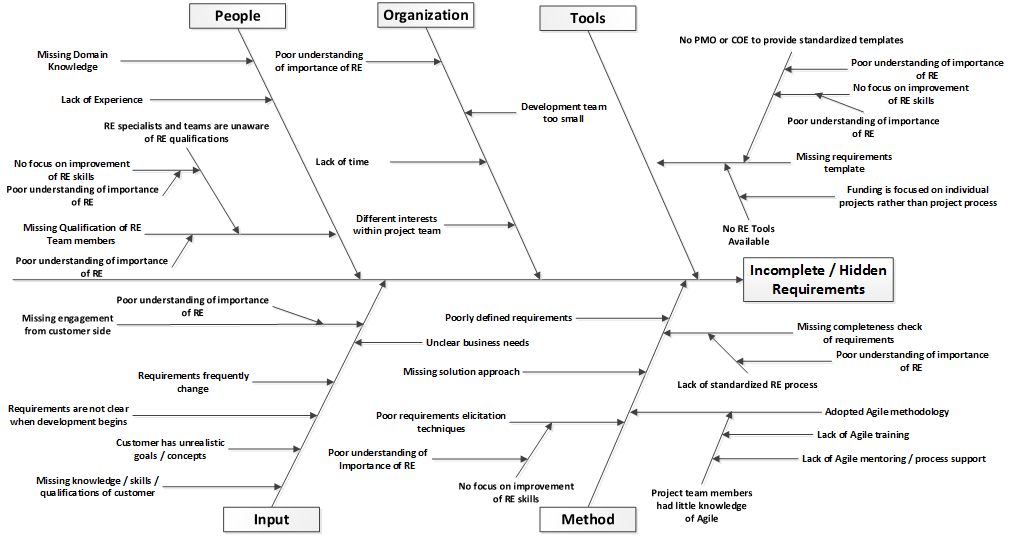
Fishbone Diagram Wiki Bawiki
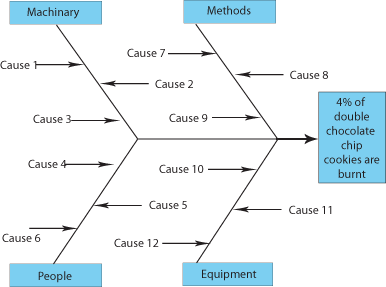
Process Improvement Made Easy Cause And Effect Aka Fishbone Aka Ishikawa Diagram Explained Management For The Rest Of Us
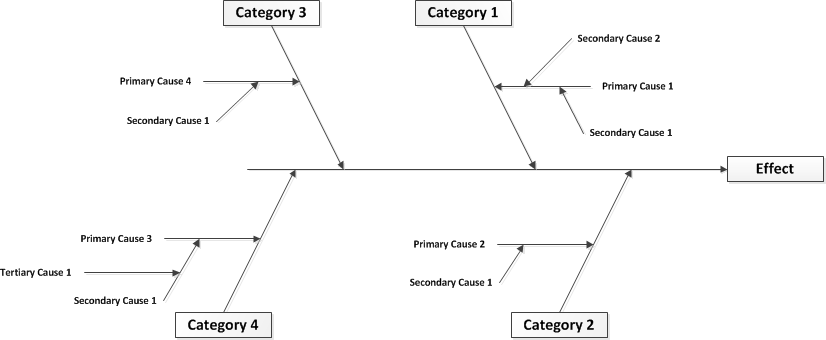
Fishbone Diagram Wiki Bawiki

Fishbone Diagram Free Ppt And Pdf Download
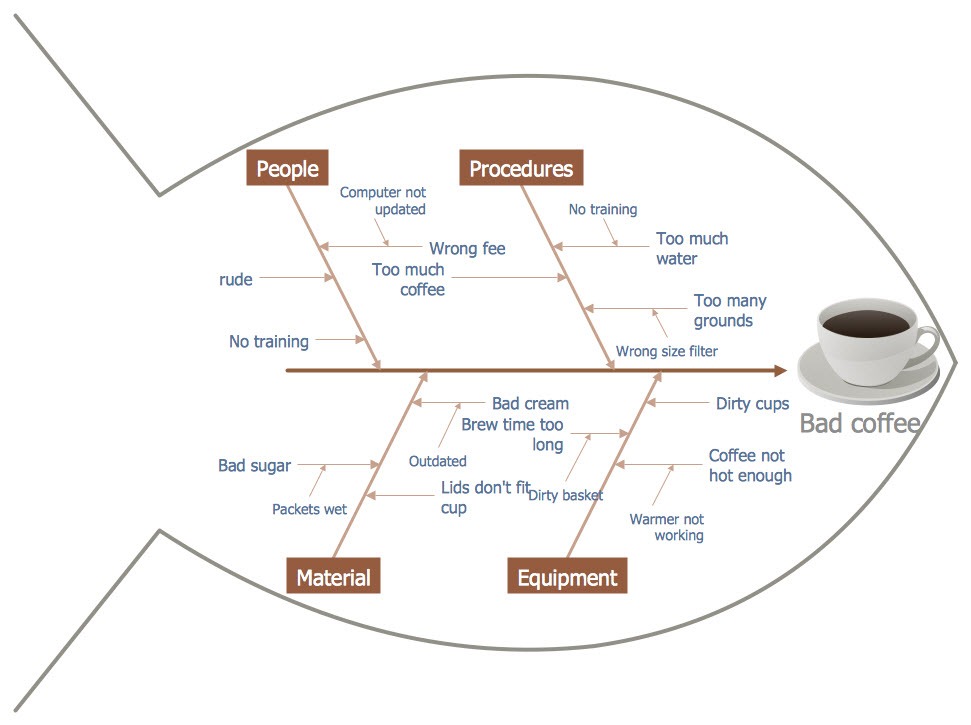
The Advantages Of Using A Fishbone For Problem Solving Latest Quality
0 Response to "37 fishbone diagram quality improvement"
Post a Comment